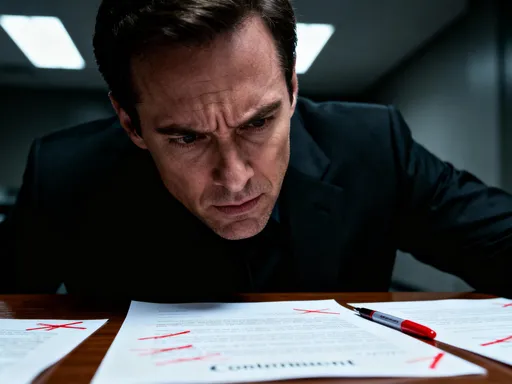
How I Survived a Contract Nightmare and Secured My Investment Returns
Ever felt your investment slipping away because of a broken contract? I did. What started as a solid deal turned into a legal maze that threatened everything. After months of stress, I learned how small oversights can explode into major risks. This is my real story—how I fought through contract disputes, protected my returns, and built stability the hard way. No jargon, just truths I wish I knew earlier. It wasn’t greed or recklessness that nearly cost me everything—it was trust without verification. I believed in the promise behind the numbers, only to discover too late that the foundation wasn’t strong enough to bear the weight of reality. This journey taught me that financial security isn’t just about picking the right opportunity. It’s about ensuring every promise is backed by structure, clarity, and enforceability.
When the Paperwork Backfires: The Hidden Risk in Every Deal
Every investment begins with trust—and a contract. But I once believed a handshake-level agreement was enough. I was wrong. Contracts aren’t just formalities; they’re the backbone of return stability. When a partner backed out and reinterpreted terms, I realized the document I signed didn’t protect me the way I thought. What I assumed was a mutual understanding turned out to be a one-sided interpretation once pressure mounted. The contract lacked specific language around performance expectations, timelines, and remedies for noncompliance. That ambiguity became a weapon. My partner claimed the agreement allowed flexibility, while I believed we had a binding commitment. Without clear definitions, the law offered little recourse. This experience revealed a harsh truth: if your contract doesn’t explicitly state what happens when things go wrong, you’ve already lost part of your investment.
Contracts serve as more than legal documents—they are tools for risk management. They define boundaries, assign responsibilities, and establish accountability. A well-structured agreement acts like an insurance policy, not because it anticipates betrayal, but because it prepares for human error, market shifts, and unforeseen challenges. Too often, investors focus solely on projected returns while treating the contract as a secondary formality. But financial potential means little without legal protection. When disputes arise—and they often do—the strength of your contract determines whether you recover value or watch it erode. In my case, the absence of a dispute resolution clause and vague payment terms opened the door to months of negotiation, stalled cash flow, and mounting legal fees. The financial cost was significant, but the emotional toll was even greater.
What makes contracts fail isn’t always intentional deception. More commonly, it’s oversight. People assume goodwill will carry a deal forward, so they skip detailed planning. They use templates downloaded from the internet, copy old agreements, or rely on verbal assurances. These shortcuts create vulnerabilities. For example, omitting a force majeure clause leaves both parties exposed during unexpected disruptions. Failing to specify jurisdiction can complicate enforcement across state or national lines. Even something as simple as not defining key terms—like “completion,” “delivery,” or “profit share”—can lead to conflicting interpretations. These aren’t minor details; they are structural pillars. Without them, the entire agreement becomes unstable under pressure. The lesson I learned too late is that a contract should not reflect optimism alone. It must also reflect realism, foresight, and a willingness to plan for worst-case scenarios.
Anatomy of a Contract Dispute: How Small Gaps Become Big Problems
Not all disputes start with betrayal—many begin with ambiguity. In my case, undefined performance metrics and unclear exit terms sparked conflict. At first, everything seemed to be progressing smoothly. We had agreed on a joint venture to develop a small commercial property, with shared responsibilities and profit distribution based on contribution. But when delays occurred and costs rose, disagreements surfaced. My partner argued that their increased involvement justified a larger share of returns. I disagreed, pointing to our original agreement. However, because the contract didn’t clearly outline how additional work would be compensated or how ownership percentages would adjust, there was no objective standard to resolve the issue. What began as a difference in opinion escalated into a full-blown dispute.
This situation highlights a common pattern: misaligned expectations grow into conflict when there are no enforceable terms to guide resolution. Payment delays, scope changes, shifting responsibilities—these issues are inevitable in any long-term investment. Without predefined rules, each party interprets fairness differently. One sees effort; the other sees obligation. One views delays as unavoidable; the other sees broken promises. These divergent perspectives create tension, especially when money is on the line. In my case, the lack of a timeline for milestone achievements meant neither side could prove who was responsible for delays. There was no mechanism for penalties or adjustments, so every delay went unaddressed until it became unsustainable. By the time we sought legal counsel, trust had already broken down, making cooperation nearly impossible.
The real danger in ambiguous contracts is that they allow small issues to compound. A missed deadline becomes a pattern. A delayed payment turns into suspicion. A vague clause invites reinterpretation. Over time, these minor gaps erode the foundation of the relationship. What could have been resolved with a simple clarification turned into a battle over credibility and intent. The absence of specific language around performance benchmarks, reporting requirements, and decision-making authority left room for manipulation and misunderstanding. I learned that clarity isn’t just about preventing dishonesty—it’s about creating a shared framework so both parties can operate with confidence. When expectations are documented, disputes become less personal and more procedural. Instead of questioning motives, you can refer to agreed-upon standards. That shift transforms conflict from emotional to manageable.
Preventing such disputes requires intentional drafting. Every agreement should define measurable outcomes, establish clear timelines, and assign responsibilities with precision. It should include provisions for handling changes—how modifications are approved, documented, and compensated. Equally important is defining what happens when one party fails to meet obligations. Without these elements, even the most promising investment can unravel. The cost isn’t just financial; it’s the loss of time, energy, and opportunity. Looking back, I realize the dispute wasn’t caused by bad intentions. It was caused by poor preparation. The fix isn’t better people—it’s better contracts.
The Cost of Conflict: How Legal Fights Drain Value Beyond Court Fees
Fighting a contract dispute isn’t just about lawyer bills. My experience showed hidden costs everywhere: frozen capital, stalled projects, lost opportunities. While courts decide, your returns sit in limbo. I invested not only money but time and emotional energy into a project that stopped moving forward the moment the conflict began. The property development was paused indefinitely. Contractors waited for instructions. Financing arrangements expired. Market conditions shifted. What was once a timely opportunity became outdated. The longer the dispute lasted, the more value evaporated. And when the legal process finally concluded, the original return projections were no longer realistic. The true cost of conflict extends far beyond attorney fees—it reshapes the entire financial landscape of an investment.
One of the most damaging effects of a legal fight is the freezing of capital. Money that could have been reinvested, generating further returns, remains trapped. In my case, over 60% of my invested funds were inaccessible during the dispute. I couldn’t sell my stake, refinance, or redirect the capital because ownership was contested. That liquidity crunch affected my other financial plans, forcing me to delay retirement savings and reduce contributions to other ventures. The ripple effect was significant. Meanwhile, ongoing legal expenses accumulated. Hourly billing, document reviews, court filings—each step added to the financial burden. These costs don’t guarantee success; they only increase the threshold for breaking even. I reached a point where recovering my initial investment felt like a victory, even though I had originally expected substantial profits.
Beyond direct costs, disputes damage relationships and reputation. Once a partnership turns adversarial, collaboration becomes impossible. Future investors notice. When I sought new opportunities, potential partners asked about past legal issues. Even when explained factually, the mere existence of a dispute raised concerns about reliability and conflict management. Some withdrew interest altogether. Others demanded stricter terms, higher collateral, or third-party oversight. My credibility, once built on a track record of successful projects, was now shadowed by one unresolved conflict. This skepticism made it harder to secure favorable deals, increasing my cost of capital across the board.
Additionally, the mental and emotional toll cannot be underestimated. Months of uncertainty, constant communication with lawyers, and the stress of defending my position affected my health and family life. I lost sleep. I became withdrawn. The joy of investing—building something valuable, contributing to growth—was replaced by anxiety and defensiveness. This emotional drain reduced my ability to make clear decisions in other areas of my financial life. The lesson here is profound: legal disputes don’t just consume money. They consume time, peace of mind, and future potential. Avoiding court isn’t about avoiding justice—it’s about preserving stability, momentum, and well-being. Sometimes, the smartest financial decision is the one that keeps you out of a courtroom.
Building Return Stability: Contracts That Work Like Seatbelts
I used to see contracts as red tape—until I needed one to survive. Now, I treat them like financial seatbelts: invisible until impact, but life-saving when they work. This part shifts from pain to solution, explaining how well-drafted agreements secure predictable returns. A strong contract doesn’t prevent all problems, but it ensures they don’t become disasters. It provides a roadmap for resolution, limits exposure, and maintains control. After my dispute, I rebuilt my approach to every agreement, focusing on clauses that enforce accountability and prevent ambiguity. The goal is no longer just to complete a transaction but to design for resilience.
Essential clauses now form the core of every contract I sign. First, a clear dispute resolution mechanism. Instead of jumping to litigation, the agreement specifies mediation or arbitration as the first step. This reduces escalation and preserves relationships. Second, performance benchmarks with measurable outcomes. Whether it’s project milestones, revenue targets, or delivery dates, these benchmarks create objective standards. If someone falls short, the data speaks louder than opinions. Third, penalty frameworks for noncompliance. These aren’t meant to punish but to incentivize timely action. Late fees, interest accruals, or automatic adjustments keep all parties aligned. Fourth, exit strategies. Every agreement now includes defined conditions under which a party can withdraw, transfer ownership, or dissolve the partnership. Knowing there’s a safe exit reduces fear and increases confidence in entering the deal.
Equally important is defining roles and decision-making authority. In my previous venture, disputes worsened because it wasn’t clear who had final say on key issues. Now, every contract specifies voting rights, approval processes, and communication protocols. This prevents bottlenecks and power struggles. I also include regular review clauses—scheduled check-ins to assess progress, update terms, and address concerns before they grow. These aren’t legal loopholes; they’re preventive maintenance. Just as you wouldn’t drive a car without routine inspections, you shouldn’t manage an investment without periodic contract reviews.
The mindset shift was crucial. Contracts are no longer seen as static documents signed once and forgotten. They are living tools, actively managed throughout the life of the investment. This approach transforms risk management from reactive to proactive. It doesn’t eliminate uncertainty, but it creates structure within it. When both parties understand the rules, expectations, and consequences, cooperation improves. Trust is reinforced not by blind faith, but by shared accountability. And when problems do arise, they are handled efficiently, minimizing disruption. Return stability isn’t an accident. It’s engineered through thoughtful design, clear language, and consistent oversight.
Choosing the Right Shield: Mediation, Arbitration, or Court?
When tension rises, your next move defines the outcome. I once rushed toward litigation—until a mentor asked, “What are you really trying to win?” That question changed my perspective. I realized I wasn’t seeking punishment; I wanted resolution, recovery, and closure. Litigation would have taken years and drained more resources. Instead, I explored alternative paths and discovered that not all conflict resolution methods are the same. Each has distinct advantages and trade-offs. Understanding them allowed me to choose wisely and protect my investment more effectively.
Mediation offers speed and collaboration. A neutral third party facilitates discussion between disputing sides, helping them reach a mutual agreement. It’s confidential, less adversarial, and typically faster than court. In my case, early mediation might have preserved the partnership and avoided prolonged conflict. However, mediation only works if both parties are willing to compromise. If one side refuses to negotiate in good faith, the process stalls. Still, for disputes rooted in miscommunication rather than misconduct, mediation is often the best first step. It keeps control in the hands of the parties, not a judge, and allows creative solutions that courts cannot order.
Arbitration provides a middle ground. Like a private trial, it involves a neutral arbitrator who hears evidence and issues a binding decision. It’s faster than court, usually confidential, and allows for specialized expertise—important in complex financial matters. Unlike mediation, arbitration results in a definitive outcome, which can be crucial when compromise isn’t possible. However, it still involves costs and limits appeal options. Once the decision is made, it’s difficult to challenge. For high-stakes disputes where privacy and efficiency matter, arbitration is a strong choice. It avoids public records and media attention, protecting reputations while delivering resolution.
Court litigation remains an option, but it should be a last resort. It offers the most formal process and the right to appeal, but it comes with significant drawbacks. Cases can take years. Legal fees multiply. Proceedings are public, exposing private financial details. The outcome depends on a judge or jury who may not fully understand the nuances of the investment. In my situation, going to court would have prolonged uncertainty and further damaged relationships. Today, I view litigation as a tool of necessity, not strategy. It’s appropriate when rights are severely violated and other methods fail, but it should never be the default response. Choosing the right resolution path isn’t about winning at all costs—it’s about protecting value, time, and peace.
Practical Steps to Future-Proof Your Agreements
After my dispute, I rebuilt my approach from the ground up. This section offers actionable steps: hiring the right legal advisor, using plain-language drafting, and conducting contract checkups like financial audits. I no longer treat legal counsel as an expense but as a strategic investment. I seek attorneys who specialize in business or investment law, not general practitioners. Their expertise ensures that agreements are not only legally sound but also aligned with industry standards. I involve them early in negotiations, not just at signing. This prevents last-minute surprises and ensures that protections are built in from the start.
I now insist on plain-language contracts. Legal jargon obscures meaning and increases the risk of misunderstanding. Clear, straightforward language ensures that all parties understand their rights and responsibilities. If I can’t explain a clause to a family member without using technical terms, I rewrite it. This doesn’t weaken the contract—it strengthens it by making it accessible and enforceable. I also use checklists for critical elements: payment terms, performance metrics, dispute resolution, termination rights, and confidentiality. Before signing, I review each item systematically, ensuring nothing is overlooked.
Contract checkups have become routine. Just as I review my portfolio annually, I schedule contract reviews every six to twelve months. These aren’t full renegotiations but assessments of whether terms still reflect reality. Has the market changed? Have responsibilities shifted? Are milestones still relevant? If so, updates are made formally and in writing. I also set triggers for automatic reviews—such as reaching a major milestone or a change in partnership structure. These practices keep agreements dynamic and responsive.
Finally, I’ve adopted a mindset of proactive protection. I don’t assume goodwill will last. I plan for the worst while hoping for the best. This isn’t pessimism—it’s prudence. I embed exit ramps, set clear performance expectations, and document everything. I communicate openly but formally, ensuring that verbal agreements are confirmed in writing. These habits have transformed my approach to investing. I move forward with greater confidence, knowing that my returns are protected not by luck, but by design.
From Risk to Resilience: Why Smart Investors Prioritize Legal Clarity
Looking back, my biggest mistake wasn’t the bad deal—it was assuming everything would work out. Now I know: return stability isn’t luck. It’s built through foresight, clear terms, and respect for legal structure. This journey taught me that financial strength includes legal preparedness. It’s not about fear—it’s about freedom. When your contracts hold firm, your investments can grow with confidence. You’re not constantly looking over your shoulder, worrying about disputes or broken promises. You can focus on growth, innovation, and long-term goals.
Smart investors don’t just analyze market trends and cash flows. They examine the strength of their agreements. They understand that a solid contract is as valuable as a solid business plan. It protects capital, ensures accountability, and enables smooth operations. It reduces friction, prevents misunderstandings, and provides a clear path forward when challenges arise. Legal clarity isn’t a barrier to opportunity—it’s the foundation that makes opportunity sustainable.
Today, I approach every investment with a dual lens: financial potential and legal durability. I ask not only “Will this generate returns?” but also “Are those returns protected?” I review agreements with the same diligence I apply to financial statements. I invest in legal counsel as I would in research or due diligence. And I educate myself continuously, staying informed about best practices in contract design and dispute prevention.
This transformation didn’t happen overnight. It came from pain, reflection, and deliberate change. But the result is greater peace of mind and more consistent outcomes. My investments are no longer vulnerable to avoidable conflicts. My returns are more predictable. My confidence is stronger. I share this story not to discourage risk, but to advocate for resilience. The goal isn’t to avoid all problems—it’s to build systems that withstand them. When you prioritize legal clarity, you’re not just protecting money. You’re protecting your future.