Lost in the Rhythm of Marrakech’s Red Walls
You know what? Marrakech isn’t just a city—it’s a living canvas. As I wandered through its ochre alleyways, the air thick with saffron and oud, I realized this place doesn’t just show you art and culture—it breathes it. From hand-painted zellige tiles to rhythm-pounding Gnawa music, every corner pulses with centuries-old creativity. This is more than sightseeing. This is feeling history beneath your feet and color in your lungs. For women in their thirties to fifties who seek meaningful travel—where beauty meets depth, and rhythm meets reflection—Marrakech offers an experience unlike any other. It’s not about ticking off landmarks, but about letting a place reshape your senses, one sun-warmed wall and melodic call to prayer at a time.
The First Step into Medina: A Sensory Overload
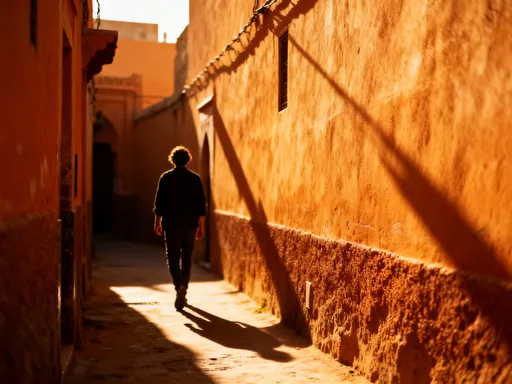
Stepping into the Medina of Marrakech is like entering a different dimension—one where time slows, and every sense is gently, insistently awakened. The Bab Agnaou gate, weathered by centuries of footsteps and sun, serves as a threshold not just into the old city, but into a way of life preserved through artistry and intention. As you cross the worn stone threshold, the world shifts: the hum of motorbikes fades, replaced by the clop of donkey hooves on cobblestones, the rhythmic clatter of copper being shaped, and the distant, hypnotic beat of frame drums drifting from unseen courtyards.
The air itself feels layered. One moment, it’s the sharp green of crushed mint from a nearby stall; the next, the smoky sweetness of cumin and grilled lamb from a street grill. A whiff of leather from a tannery floats by, followed by the delicate trail of orange blossom water from a passing vendor. These are not incidental scents—they are the city’s breath, its daily rhythm made tangible. Colors, too, assert themselves boldly: terracotta walls glowing under the North African sun, cobalt-blue doorways standing like secrets against dusty pink, and splashes of saffron-yellow fabric fluttering above alley markets.
What makes the Medina so profoundly moving is that its beauty is not staged for tourists. The labyrinthine streets were designed over centuries to provide shade, privacy, and protection. Narrow alleys twist and fork without warning, shielding homes from the harsh sun and prying eyes. There are no street signs, few straight lines—navigation depends on memory, landmarks, and occasional guidance from a kind-faced elder sweeping his doorstep. This is by design: the city reveals itself slowly, rewarding patience and presence. A sudden opening might unveil a hidden fountain with carved stucco blossoms, or a courtyard where jasmine climbs an ancient arch.
Walking through the Medina without a map may feel disorienting at first, especially for travelers accustomed to efficiency and GPS precision. But that’s precisely the point. In Marrakech, getting lost is not a mistake—it’s a method. The absence of a fixed route invites curiosity. You pause more. You notice more. You begin to read the city like a poem, where each line—each turn—builds toward a deeper understanding. A child laughs from an upstairs window. A craftsman smiles as he polishes a brass lantern. These are not moments to photograph and move on from—they are invitations to connect, quietly and authentically.
Art in Motion: Street Performers and Living Traditions
No visit to Marrakech is complete without spending time in Jemaa el-Fnaa, the city’s pulsing heart. By day, the square is a study in controlled motion: juice vendors arrange pyramids of oranges, dentists lay out their tools on cloths, and water sellers in red hats and brass-studded hats circle the plaza, calling out in melodic cadence. It’s busy, yes, but orderly—a marketplace in full rhythm. As the sun dips and the call to prayer echoes from the Koutoubia Mosque, something shifts. The square transforms. Smoke rises from food stalls. Musicians tune their instruments. And the night’s true performance begins.
Fire-eaters gather crowds with fearless precision, their faces glowing in the flame. Snake charmers, though increasingly rare and subject to animal welfare concerns, still draw onlookers with their slow, hypnotic flute melodies. Storytellers, often older men with weathered faces and commanding voices, hold circles of listeners spellbound with tales passed down through generations. These are not rehearsed acts for foreign audiences—they are living traditions, rooted in Moroccan folklore, spirituality, and community. Many performers come from families where storytelling, music, or acrobatics have been practiced for decades, if not centuries.
One of the most profound cultural expressions in Marrakech is Gnawa music. Originating from sub-Saharan Africa and deeply tied to spiritual healing rituals, Gnawa blends trance-like rhythms with call-and-response vocals. The guembri, a three-stringed bass instrument, pulses like a heartbeat, while metal castanets called qraqeb keep time in shimmering waves. Though once confined to private ceremonies, Gnawa has found new life in public spaces—cafés, festivals, and even fusion collaborations with jazz and blues artists. Yet its essence remains: it is music that seeks to balance body and soul, to heal and connect.
Henna artists, too, are more than beauticians—they are cultural keepers. As they trace intricate patterns onto a visitor’s hand, they often explain the symbolism: a palm for protection, a flower for joy, a geometric knot for continuity. These designs vary by region and occasion, and many women in Morocco still receive henna before weddings or religious holidays. To sit for a henna application is to participate in a ritual that transcends decoration—it becomes a quiet act of storytelling, one stroke at a time.
Hidden Courtyards and Riad Artistry
Amid the sensory rush of the Medina, the riad offers sanctuary. These traditional Moroccan homes, built around a central courtyard or garden, are architectural odes to peace, privacy, and harmony. From the outside, they appear unassuming—plain doors set into high walls, offering no hint of the beauty within. But step inside, and the world changes. Light filters through carved wooden lattices, casting intricate shadows on tiled floors. A fountain murmurs in the center, its gentle splash echoing off stucco walls adorned with geometric patterns. The air is cooler, quieter, scented with jasmine or lemon trees in ceramic pots.
The design of a riad is not merely aesthetic—it reflects deep philosophical and spiritual values. In Islamic architecture, symmetry, repetition, and the use of water are not decorative choices but expressions of unity, balance, and the divine. Zellige tilework, with its hand-cut mosaic pieces in blues, greens, and whites, forms complex geometric patterns that seem to shift as you move. These patterns, often based on mathematical precision, symbolize the infinite nature of creation. Carved cedar ceilings, meanwhile, rise like open hands, their delicate fretwork allowing air and light to flow freely.
Many riads have been restored and opened as guesthouses, offering travelers the rare chance to live within this artistry. Staying in one—even for a single night—alters your perception of the city. You wake to the sound of birds in the courtyard, sip mint tea on a rooftop terrace at sunrise, and watch the light change across the tiles throughout the day. The contrast between the bustling streets outside and the serenity within teaches a quiet lesson: that beauty and calm are not escapes from life, but essential parts of it.
While private riads are not open to the public, several cultural foundations and restored historic homes offer guided visits. These spaces allow guests to appreciate the craftsmanship without intruding on personal privacy. Walking through a centuries-old reception room, you begin to understand how every element—from the placement of a window to the curve of a fountain—was designed to create a sense of balance. In a world that often feels chaotic and rushed, the riad stands as a testament to intentionality, a reminder that peace can be built, one tile at a time.
Crafting Identity: Souks as Creative Hubs
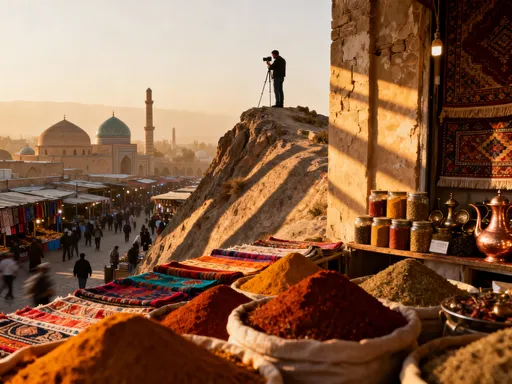
The souks of Marrakech are often described as markets, but they are so much more—they are living workshops, social networks, and repositories of knowledge. Wandering through the labyrinth of covered alleys, you don’t just see goods for sale; you witness creation in real time. In the leather section, artisans stretch and dye hides using methods unchanged for generations. Vats of indigo, saffron, and henna line the walls, their rich colors staining the air with earthy depth. Nearby, coppersmiths hammer rhythmically at brass trays, their hands moving with the precision of dancers. Each strike shapes not just metal, but legacy.
What makes the souk remarkable is the apprenticeship system that sustains it. Skills are not learned in schools but through years of observation, practice, and mentorship. A young weaver may spend a decade mastering the patterns of Berber rugs, each knot carrying regional meaning. A ceramicist learns not from textbooks but from watching a master mix glazes, test kiln temperatures, and correct imperfections. This is slow knowledge—deep, embodied, and passed hand to hand. And while tourism has brought change, many artisans still produce for local families, ensuring their work remains rooted in function as well as artistry.
For the thoughtful traveler, engaging with the souk is about respect as much as shopping. It’s wise to ask before photographing someone at work—many artisans welcome interest but value dignity. Bargaining is expected, but it should be done with warmth, not aggression. A smile, a shared cup of tea, and a few words in Arabic (“Salam alaikum,” “Shukran”) go far. When you purchase a handwoven rug, a painted plate, or a leather pouch, you’re not just buying a souvenir—you’re supporting a tradition that resists mass production and honors patience.
Some of the most meaningful moments in the souk happen off the main paths. A shopkeeper invites you to sit on a low stool. He shows you a carpet woven by his grandmother, its symbols telling of fertility, protection, and journey. He doesn’t pressure you to buy—he wants you to understand. These are the exchanges that linger: not transactions, but connections. In a world of fast fashion and disposable goods, the souk reminds us that true value lies in time, care, and story.
Galleries Beyond the Medina: Modern Moroccan Expression
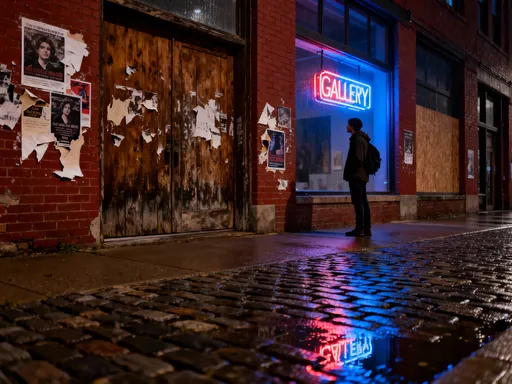
Just beyond the ancient walls of the Medina, a quieter, equally vibrant artistic current flows. Contemporary galleries and cultural spaces offer a dialogue between tradition and modernity, where Moroccan artists reinterpret heritage through fresh eyes. These are not attempts to replace the old, but to extend it—like a new branch on an old tree. Painters blend Berber symbols with abstract expressionism. Photographers capture the daily life of the city with poetic sensitivity. Sculptors use reclaimed wood and metal to comment on urban growth and environmental change.
One of the most inspiring developments is the rise of women-led art cooperatives and nonprofit centers. In spaces often tucked into quiet neighborhoods, female artists gather to paint, weave, and teach. These collectives provide not just creative outlets but economic independence, especially for women from rural areas. Their work—whether intricate embroidery, ceramic installations, or mixed-media pieces—often explores themes of identity, memory, and resilience. Some have gained international recognition, participating in residencies and exhibitions abroad, yet they remain deeply connected to their roots.
What stands out in these modern spaces is the absence of pretension. Art is not locked behind glass or guarded by stern attendants. Visitors are welcomed, conversations are invited, and tea is often served. An artist might stand beside her painting, ready to explain the inspiration—a grandmother’s recipe, a childhood memory of the Atlas Mountains, the rhythm of a wedding song. These galleries are not escapes from the Medina but complements to it, offering reflection after immersion.
For women travelers, these spaces can feel especially resonant. They speak to creativity, perseverance, and the quiet strength of community. Seeing women express themselves through art—freely, proudly, and professionally—adds another layer to the Marrakech experience. It’s a reminder that culture is not static; it evolves, adapts, and thrives when given space to breathe. And in these galleries, that space is carefully, lovingly made.
Food as Cultural Language
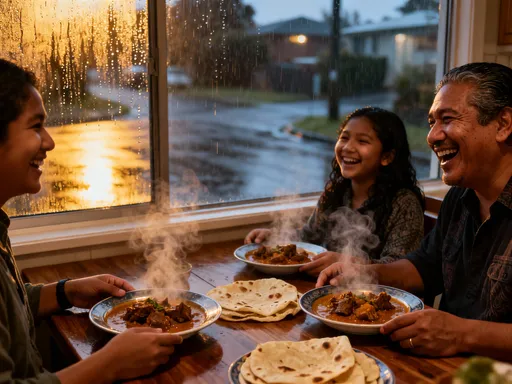
In Marrakech, food is not just sustenance—it is conversation, celebration, and memory. A tagine, slowly cooked over charcoal, is more than a dish; it is an act of care. The conical lid traps steam, allowing spices like cinnamon, ginger, and ras el hanout to deepen over hours. The result is tender meat, soft vegetables, and a sauce that tastes like history. Meals are rarely eaten alone. They are shared on low tables, seated on cushions, passed hand to hand. This is food as connection.
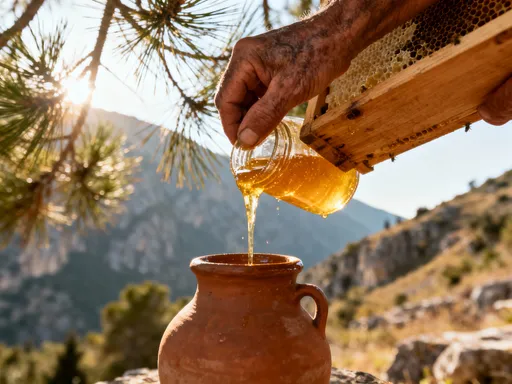
Even street food carries cultural weight. Msemen, a flaky, buttery flatbread, is often served with honey or olives for breakfast—a simple meal that varies by region and family. Harira, a rich soup made with lentils, tomatoes, and herbs, is traditionally served to break the fast during Ramadan, linking taste to ritual. And then there is mint tea—bright, sweet, and poured from a height to create a froth. This gesture, more than the drink itself, is a symbol of hospitality. To be offered tea is to be welcomed.
Cooking in Moroccan homes is rarely done from written recipes. Instead, it is taught by doing—by standing beside a mother or aunt, tasting, adjusting, remembering. A pinch of this, a handful of that. The rhythm of the kitchen mirrors the rhythm of life: intuitive, responsive, and deeply sensory. Many women in Marrakech still prepare meals in clay tagines, using wood or charcoal, preserving methods that honor both flavor and tradition.
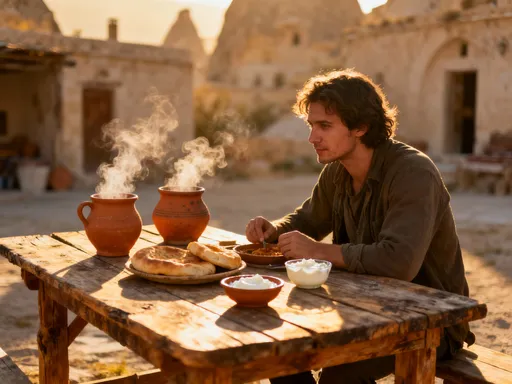
For visitors, sharing a meal—whether in a family home, a local eatery, or a rooftop café—offers one of the most authentic cultural experiences. It’s an opportunity to slow down, to savor, to listen. A host might explain the significance of a spice, or share a story about a dish passed down through generations. In these moments, food becomes a bridge—not just between hunger and fullness, but between strangers and friends.
Wandering with Purpose: How to Move Like a Local
To truly experience Marrakech, one must adopt a different rhythm—one of patience, presence, and openness. The city does not reward rushing. It rewards returning. A square visited at dawn, noon, and dusk reveals different faces: the quiet of morning prayers, the bustle of midday commerce, the magic of lantern-lit evenings. The same alley that felt chaotic in the afternoon may, by twilight, echo with the soft call of a flute from an unseen window.
Practical advice enhances the journey. Wear comfortable, breathable clothing and sturdy shoes—Marrakech is a city of walking, often on uneven stone. Carry cash, as many small vendors and artisans do not accept cards. Respect prayer times by lowering your voice near mosques and pausing during the call to prayer. Avoid scheduling every hour; leave room for spontaneity. A wrong turn might lead you to a carpet weaver’s studio, a hidden garden, or a rooftop with a view of the Atlas Mountains.
Learn a few Arabic phrases: “Salam alaikum” (peace be upon you), “Shukran” (thank you), “La, shukran” (no, thank you). These small gestures of respect open doors—sometimes literally. A shopkeeper may invite you in for tea. A child may giggle and wave. These moments, fleeting as they may be, are the soul of travel.
Most importantly, let go of the need to see everything. Marrakech is not a checklist. It is a feeling. It is the warmth of sun on stone, the scent of orange blossom on the breeze, the sound of laughter rising from a courtyard. It is the quiet understanding that beauty is not always loud, and meaning is often found in stillness. When you leave, you won’t just carry souvenirs—you’ll carry a rhythm, a memory, a piece of red wall embedded in your heart.